The 411 on Parts Work
What is parts work, and why is everyone always talking about it in trauma therapy?
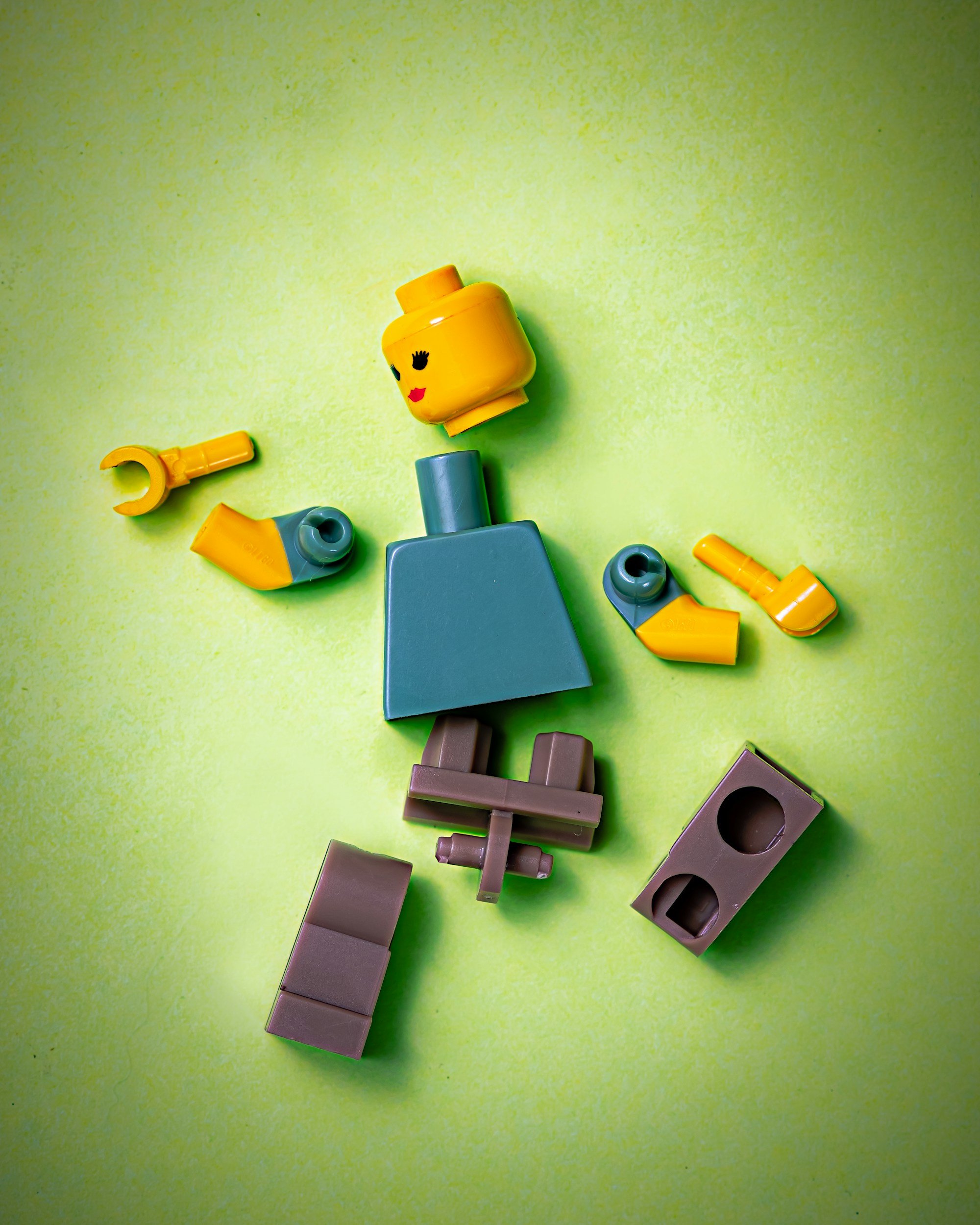
There are many different ways to go about parts work, but in my opinion, they all get at the same core idea: that when we go through trauma, we develop different survival strategies (parts) that allowed us to survive it. When we get triggered, one (or many) of these parts can come up to try to protect us.
*A quick disclaimer before we go any further: like many things in therapy, there is not just one way to think about things. Presented here is my interpretation of how I like to use parts work with clients. It does not mean that it is the only way or the right way.
Now that we’ve gotten that out of the way, let’s get into how I use parts work to help my clients heal.
Like I mentioned in this post, there are a few main goals we’re trying to accomplish with parts work:
Reconnecting to and building a stronger relationship with ourselves
Learning to demonstrate care, compassion, and love towards ourselves
Learning how to meet our needs (and how to hear what those needs are)
Reparenting ourselves to give ourselves what we needed but didn’t get growing up
Starting to think of ourselves as a compilation of different parts with different thoughts and feelings can allow us to take in the complexity and the nuance of being human beings with many (and sometimes conflicting) feelings.
While there are many different modalities that use some form of parts work, there are two main ones that I’m going to discuss here: inner child work, and internal family systems, or IFS. I have some training in both modalities (though significantly more training in inner child work), and so I can see both pros and cons to each way of thinking about our parts.
Inner Child Work
Inner child work largely focuses on the concept of having an inner child and an inner adult. The inner child is seen as holding all of our trauma responses, whereas the inner adult is seen as our wisest, best adult self. If you like neuroscience concepts, I like to think of our inner adult as living in our prefrontal cortex (aka the most recently evolved, rational thinking, logic & reasoning part of our brain) and our inner child as living more in the limbic system (aka the more primitive part of our brain responsible for our survival). The goal of inner child work is to be able to separate out the inner child feelings (past stuff) from the inner adult feelings (present day stuff) and put our inner adult back in charge so that our inner child is no longer “driving the bus” in the way we show up or the decisions we make.
One of the things I love about the concept of inner child work is that I find it’s far easier for us to access compassion for a child than it is for an adult (especially if we were often told growing up that we should “know better”). We can also then think about how to “reparent” that inner child to help ourselves learn and grow in the ways we need and want to. One downside is that only having two parts (inner child and inner adult) may not give space for enough nuance and complexity for us to feel adequately seen and heard.
Internal Family Systems (IFS)
Internal Family Systems (IFS) is similar to inner child work but uses different names and also allows for more parts than just the two (inner child and inner adult) of inner child work. In IFS, the inner child concept of "the inner adult” is called “Self”, and the “inner child” is broken out into three different types of parts: managers, firefighters, and exiles. Each of these parts has a different function, and there’s no limit to how many parts you can have in IFS. The goal in IFS is to “unblend” our parts, similar to the goal of being able to separate our inner adult from inner child in inner child work.
One of the things I find beneficial about IFS is that it allows space for more complexity in our parts. Having multiple parts that have different functions can allow us to more accurately describe our experiences and feel more seen and heard. On the downside, for some people, the concept of having so many different parts can feel overwhelming and the idea of inner child work with just two parts feels easier.
In both forms of parts work, the vehicle through which we achieve these goals is by reconnecting with ourselves and learning to hear and meet our needs, many of which may not have gotten met in childhood.
How I Use Parts Work With Clients
Since I have training in both approaches, I like to offer clients options when beginning parts work. As a therapist who is also in therapy, I know that there is no one size fits all approach to anything in therapy - so I like to offer my clients options and help them feel out what resonates most with them. For some clients, the simplicity of thinking about the inner adult and the inner child part makes it easier for them to begin to reconnect with themselves, have more self-compassion, and practice listening to and meeting their emotional needs. For others, just having these two parts can feel stifling and it feels more supportive to offer the option of having many different parts. Alternatively, some like to think of their parts as living in more of a gray area between the two modalities: perhaps they resonate most with the idea of differently aged inner child parts, with each one representing different trauma responses for that person. Also, sometimes the language of one method resonates more with some clients - sometimes the idea of an inner child can feel patronizing or invalidating, or sometimes it can feel really validating and safe. As a therapist, my goal is to help my clients feel out which way of conceptualizing their parts feels best and most useful to them; because at the end of the day, no matter which approach we use, it’s about getting back in touch with yourself and your needs.
Ready to get started doing parts work with a licensed therapist? Click here to learn more and see if we could be the right fit to work together.